Sponsored
Sponsored
Media Summary: Let's work out an imaging problem for a simple single lens If an object is too close to be in focus, what should you do? Does the film plane (or ccd) need to go farther from the lens or closer? The eyeball, near-sighted and far-sighted.

The Camera Physics With Professor - Detailed Analysis & Overview

Let's work out an imaging problem for a simple single lens If an object is too close to be in focus, what should you do? Does the film plane (or ccd) need to go farther from the lens or closer? The eyeball, near-sighted and far-sighted. I would argue that the invention (or discovery) of lenses is one of the most important milestones in science and technology ever. An introduction to basic concepts in optics: why an optic is required to form an image, basic types of optics, resolution. Contents: ... Become a Big Think member to unlock expert classes, premium print issues, exclusive events and more: ...

So how do we use ray diagrams to figure out where an image is located? Well, it's not that complicated, just watch. [00:00] a.) Review of image formation - converging lens [09:13] b.) In today's video I will be explaining the basic coimpoments of a digital Most photographers know that aperture affects the depth of field. (Small aperture = sharp image; large aperture = blurry image.) Stanford scientists have created an open-source
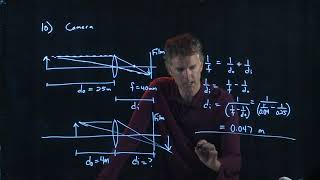
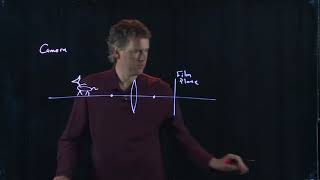
Photo Gallery

The Camera | Physics with Professor Matt Anderson | M28-20
Adjusting Camera Focus | Physics with Professor Matt Anderson | M28-04
Optical Instruments
Lenses | Physics with Professor Matt Anderson | M27-12
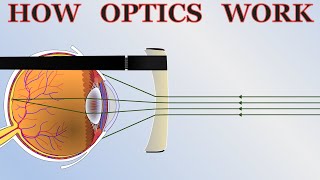
How Optics Work - the basics of cameras, lenses and telescopes
Physicist Brian Cox explains quantum physics in 22 minutes
Geometric Optics
Thin Lens and Image Formation | Physics with Professor Matt Anderson | M27-13
9. F: Gen Phys II Lecture: Cameras & Human Vision
Explaining Cameras... With Physics
Why aperture affects the Depth of Field
Stanford Photo Scientists are Teaching the Camera New Tricks
View Detailed Profile
The Camera | Physics with Professor Matt Anderson | M28-20

The Camera | Physics with Professor Matt Anderson | M28-20

Let's work out an imaging problem for a simple single lens

Adjusting Camera Focus | Physics with Professor Matt Anderson | M28-04

Adjusting Camera Focus | Physics with Professor Matt Anderson | M28-04

If an object is too close to be in focus, what should you do? Does the film plane (or ccd) need to go farther from the lens or closer?

Sponsored
Optical Instruments

Optical Instruments

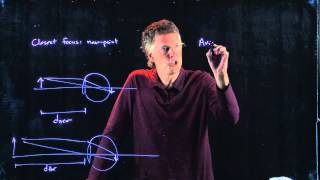
The eyeball, near-sighted and far-sighted.

Lenses | Physics with Professor Matt Anderson | M27-12

Lenses | Physics with Professor Matt Anderson | M27-12

I would argue that the invention (or discovery) of lenses is one of the most important milestones in science and technology ever.

How Optics Work - the basics of cameras, lenses and telescopes

How Optics Work - the basics of cameras, lenses and telescopes

An introduction to basic concepts in optics: why an optic is required to form an image, basic types of optics, resolution. Contents: ...

Sponsored
Physicist Brian Cox explains quantum physics in 22 minutes

Physicist Brian Cox explains quantum physics in 22 minutes

Become a Big Think member to unlock expert classes, premium print issues, exclusive events and more: ...

Geometric Optics

Geometric Optics

... is reversed because in front of

Thin Lens and Image Formation | Physics with Professor Matt Anderson | M27-13

Thin Lens and Image Formation | Physics with Professor Matt Anderson | M27-13

So how do we use ray diagrams to figure out where an image is located? Well, it's not that complicated, just watch.

9. F: Gen Phys II Lecture: Cameras & Human Vision

9. F: Gen Phys II Lecture: Cameras & Human Vision

[00:00] a.) Review of image formation - converging lens [09:13] b.)

Explaining Cameras... With Physics

Explaining Cameras... With Physics

In today's video I will be explaining the basic coimpoments of a digital

Why aperture affects the Depth of Field

Why aperture affects the Depth of Field

Most photographers know that aperture affects the depth of field. (Small aperture = sharp image; large aperture = blurry image.)

Stanford Photo Scientists are Teaching the Camera New Tricks

Stanford Photo Scientists are Teaching the Camera New Tricks

Stanford scientists have created an open-source
Related Video Content

Windows Camera - Free download and install on Windows | Microsoft … information

The Camera app is faster and simpler than ever. Just point and shoot to take great pictures automatically on any PC...

‎Camera App - App Store information

Download Camera by Apple on the App Store. See screenshots, ratings and reviews, user tips, and more apps like...

Webcam Toy information

Take pictures online with your webcam using over 80 free fun effects. Save photos to your computer, or share with...

Pixect - Take photos and make videos with camera online information

Take pictures online and record videos with webcam. Webcam effects for Photos and videos. Flip, rotate and crop...

Glazer's Camera information

Glazer’s Camera is a leading photo specialty retail establishment for photography and filmmaking equipment for both...

Sponsored